Why Learn the Ukulele?
A Joyful and Approachable Beginning
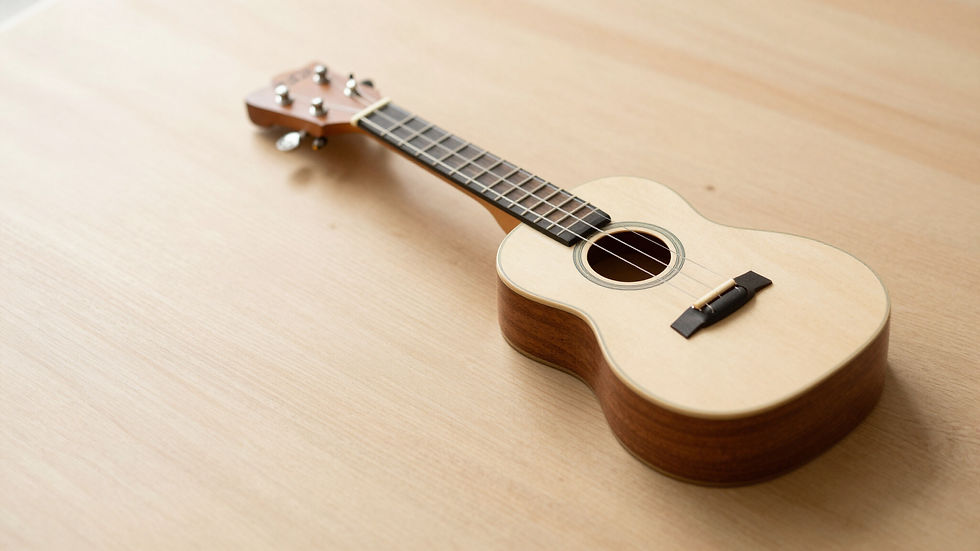
The ukulele is an inviting instrument for students who are beginning their musical journey. Its comfortable size, accessible chord shapes, and warm sound allow students to begin making music while gradually developing strong foundational skills.
Lessons go beyond simply memorizing songs. Students learn how rhythm, melody, chords, listening, and musical expression work together, helping them become more confident and independent musicians.

Chords and Strumming
Learning essential chord shapes, smooth transitions, and a variety of age-appropriate strumming patterns.
Listening Skills
Strengthening musical memory, pitch awareness, and the ability to recognize and reproduce musical patterns.
What Students Learn
Rhythm and Pulse
Developing steady beat, rhythmic accuracy, coordination, and the ability to play with confidence.
Healthy Technique
Building comfortable posture, relaxed hand position, clear tone, and efficient playing habits.
Building Complete Musical Skills
Melody and Note Reading
Exploring simple melodies while building familiarity with musical notation and the ukulele fingerboard.
Musical Expression
Learning to shape phrases, communicate character, and perform songs with imagination and personality.
Lesson Experience
Structured Learning with Room for Joy
Every student learns differently. Lessons are thoughtfully adapted to the student’s age, experience, interests, pace, and learning style.
Instruction may include method-book study, familiar songs, rhythm activities, ear training, music theory, creative exercises, and performance preparation. Students receive clear, manageable practice goals so they know what to work on between lessons.
The goal is to make learning enjoyable while still building the discipline, understanding, and independence needed for long-term musical growth.
Who the Lessons Are For
Designed for Beginning and Developing Musicians
Ukulele lessons may be a good fit for:
- Children beginning their first musical instrument
- Piano students interested in learning a second instrument
- Students who enjoy singing, rhythm, and popular songs
- Beginners seeking an approachable and portable instrument
- Online students who would like personalized ukulele instruction
No previous ukulele experience is required. Recommendations are based on each student’s readiness, goals, and musical background.

Why Noble Music Academy?
Professional Music Education
Lessons are guided by Ms. Gigi’s bachelor’s and master’s degrees in Music Education and extensive experience teaching children.
Child-Centered Structure
Clear expectations, patient guidance, and age-appropriate instruction help students progress without unnecessary pressure.
Whole-Musician Development
Students develop rhythm, listening, reading, technique, expression, and independent practice skills—not simply a collection of songs.
Choosing an Instrument
Finding the Right Ukulele
Instrument size and quality can make a meaningful difference in a student’s comfort and progress. Before purchasing, families are welcome to ask for guidance on soprano, concert, or tenor ukuleles, as well as recommended beginner models.
Students should have an appropriately sized, tunable instrument available for lessons and home practice.
Frequently Asked Questions
Do students need previous musical experience?
No. Lessons can begin with complete beginners and will be adjusted to the student’s current experience and learning needs.
Does the student need an ukulele before the first lesson?
It is helpful to have an instrument available for regular practice. Families may contact the academy for size and model recommendations before purchasing.
How much should students practice?
Consistent, focused practice is more valuable than occasional long sessions. Practice expectations are adjusted according to the student’s age, level, and goals.
Are online ukulele lessons available?
Online instruction may be available for students outside North San Jose or families who prefer remote lessons. Suitability can be discussed during the inquiry process.
Can students learn songs they enjoy?
Yes. Student interests may be incorporated alongside carefully selected materials that support technique, rhythm, reading, and musicianship.